The term identifies woody perennial plants growing in the unique environment along a specific state’s shoreline. These plants exhibit adaptations to the coastal conditions, including salt spray, high winds, and varying soil compositions. Examples include Sitka spruce, western hemlock, and shore pine, each species possessing specific tolerances and growth characteristics suited to this ecological niche.
This flora plays a crucial role in maintaining the health and stability of the region’s ecosystem. It provides habitat for diverse wildlife, helps to prevent erosion, and contributes to air and water quality. Historically, these forests have been vital resources for indigenous populations and later for the timber industry, shaping the region’s economy and culture.
The following sections will delve into the specific types of coniferous and deciduous vegetation found in this region, exploring their ecological significance, the challenges they face due to environmental factors, and ongoing conservation efforts aimed at preserving these valuable resources for future generations.
Guidance Regarding Coastal Woodland Management
Effective stewardship of forest ecosystems along the Oregon coastline requires informed practices that balance resource utilization with ecological preservation. The following guidelines outline crucial considerations for ensuring the long-term health and sustainability of these unique environments.
Tip 1: Conduct Thorough Site Assessments: Prior to any management activity, comprehensive evaluations of soil conditions, drainage patterns, and existing vegetation are essential. This informs appropriate species selection and minimizes potential environmental impacts.
Tip 2: Implement Selective Harvesting Techniques: Clear-cutting practices are generally discouraged due to their disruptive effects on soil stability and wildlife habitat. Selective harvesting, which removes only mature or diseased trees, promotes natural regeneration and maintains biodiversity.
Tip 3: Prioritize Reforestation with Native Species: When reforestation is necessary, utilize seedlings of species naturally adapted to the coastal environment, such as Sitka spruce, western hemlock, and shore pine. This ensures successful establishment and long-term resilience.
Tip 4: Manage Invasive Species Aggressively: Non-native plants can outcompete native vegetation and disrupt ecosystem function. Early detection and control of invasive species are crucial for maintaining the integrity of forest communities.
Tip 5: Protect Riparian Zones: Maintain buffer zones of vegetation along streams and wetlands to filter pollutants, stabilize banks, and provide critical habitat for aquatic and terrestrial wildlife.
Tip 6: Mitigate Erosion and Sedimentation: Implement erosion control measures, such as mulching and terracing, to minimize soil loss and prevent sedimentation of waterways, particularly during logging operations.
Tip 7: Plan for Climate Change Impacts: Consider the potential effects of climate change, such as sea-level rise and increased storm frequency, when making management decisions. Promote species diversity and resilience to enhance the ability of forests to adapt to changing conditions.
Adherence to these guidelines promotes responsible management, safeguarding the ecological integrity and economic value of coastal woodlands for current and future generations.
The following sections will explore specific threats and conservation strategies in greater detail.
1. Species Identification

Accurate classification of woody species forms the bedrock of understanding the coastal region’s unique ecosystems. This knowledge is essential for effective forest management, conservation planning, and assessing the impact of environmental changes. Proper classification allows for the recognition of species-specific adaptations to the harsh coastal environment, such as salt tolerance in shore pine or wind resistance in Sitka spruce. Inaccurate classification can lead to misinformed management decisions, potentially harming vulnerable species or exacerbating existing ecological imbalances. For example, mistaking a western hemlock sapling for a non-native species might result in its unintended removal, hindering the forest’s natural regeneration process.
The practical significance of accurate identification extends to various fields. Foresters rely on this knowledge to determine appropriate harvesting strategies, ensuring sustainable timber yields while maintaining forest health. Ecologists use species data to monitor biodiversity and assess the effects of climate change on species distribution and abundance. Land managers depend on this information to develop effective restoration plans following disturbances such as wildfires or landslides. Furthermore, understanding the different species enables the implementation of targeted measures to combat invasive plants that threaten the native flora.
In conclusion, species identification is not merely an academic exercise but a fundamental prerequisite for responsible stewardship of coastal woodlands. Challenges remain in accurately identifying species, particularly seedlings, and effectively disseminating this knowledge to stakeholders. Addressing these challenges through ongoing education and investment in taxonomic expertise is vital for ensuring the long-term health and resilience of the Oregon Coast’s unique forest ecosystems.
2. Coastal Adaptation

The capacity of trees to survive and thrive along the Oregon coast is inextricably linked to coastal adaptation, a suite of evolved traits enabling them to withstand the region’s unique environmental stressors. Salt spray, persistent high winds, fluctuating temperatures, and nutrient-poor soils exert selective pressures favoring individuals with specialized characteristics. For example, the Sitka spruce, a dominant species in this ecosystem, exhibits a high tolerance for salt aerosols, preventing foliar damage commonly observed in less adapted species. Similarly, shore pine often demonstrates stunted growth and a prostrate form, reducing its exposure to damaging winds. These adaptations are not merely coincidental but represent evolutionary responses honed over millennia. The absence of these adaptations would render many tree species incapable of persisting in this challenging environment, fundamentally altering the coastal ecosystem’s structure and function.
The practical significance of understanding these adaptations extends to conservation and restoration efforts. Recognizing the specific tolerances of different tree species allows for informed decisions regarding reforestation projects, ensuring that planted species are well-suited to the prevailing environmental conditions. For instance, planting western red cedar, which exhibits lower salt tolerance than Sitka spruce, closer to the shoreline would likely result in reduced survival rates and diminished ecosystem benefits. Furthermore, an awareness of adaptation mechanisms can inform strategies for mitigating the impacts of climate change. Selecting and propagating trees with enhanced drought resistance or salt tolerance can help to maintain forest health in the face of changing environmental conditions. The implications of disregarding these adaptive strategies are significant, potentially leading to forest decline, habitat loss, and decreased coastal protection.
In summary, coastal adaptation constitutes a vital component of Oregon Coast tree species, influencing their distribution, growth patterns, and resilience. A thorough understanding of these adaptations is essential for effective forest management, conservation planning, and mitigating the impacts of environmental change. Challenges remain in fully elucidating the genetic basis of these adaptations and predicting their response to future environmental shifts. Continued research and monitoring are therefore crucial for ensuring the long-term health and sustainability of these valuable coastal ecosystems.
3. Ecological Function
The ecological function of forest ecosystems along the Oregon coast is intrinsically linked to the presence and health of its trees. These species fulfill critical roles that maintain the stability, biodiversity, and overall productivity of the coastal environment.
- Carbon Sequestration and Climate Regulation
Coastal forests act as significant carbon sinks, absorbing atmospheric carbon dioxide through photosynthesis. This process mitigates climate change by reducing greenhouse gas concentrations. Additionally, forests influence local climate by regulating temperature and humidity. For example, dense canopies reduce surface temperatures during summer months, providing thermal refuge for wildlife and reducing evaporative water loss.
- Habitat Provision and Biodiversity Support
Trees provide critical habitat for a wide range of species, from invertebrates and fungi to birds and mammals. The structural complexity of forest canopies and understories creates diverse niches that support a rich array of organisms. Cavity-nesting birds, such as woodpeckers, rely on mature trees for nesting sites. Decomposing logs and branches support fungi and insects, which in turn provide food for other wildlife.
- Soil Stabilization and Erosion Control
The root systems of trees bind soil particles together, preventing erosion and landslides. This is particularly important in coastal areas prone to heavy rainfall and steep slopes. The presence of a healthy forest cover reduces sediment runoff into streams and rivers, maintaining water quality and protecting aquatic habitats. In areas where forests have been degraded or removed, soil erosion can lead to significant environmental damage.
- Water Regulation and Nutrient Cycling
Forest canopies intercept rainfall, reducing runoff and promoting infiltration into the soil. This helps to replenish groundwater supplies and regulate streamflow. Trees also play a crucial role in nutrient cycling, absorbing nutrients from the soil and returning them to the ecosystem through leaf litter and decomposition. The accumulation of organic matter in forest soils enhances soil fertility and supports plant growth.
These ecological functions are interconnected and interdependent, highlighting the critical role of tree species in maintaining the health and stability of coastal ecosystems. Disruptions to forest cover, whether from logging, wildfires, or invasive species, can have cascading effects throughout the ecosystem, impacting biodiversity, water quality, and climate regulation.
4. Economic Value

The commercial worth associated with the forest resources along the Oregon coast represents a significant aspect of the region’s economy, influencing employment, revenue generation, and community stability. The extraction and utilization of these timber resources, along with tourism related to the coastal landscape, drive substantial financial activity, necessitating a comprehensive understanding of the complex interplay between economic gains and ecological sustainability.
- Timber Production and Forest Products Industry
Harvesting and processing of coastal trees, primarily Sitka spruce, western hemlock, and Douglas fir, constitute a major component of the state’s timber industry. These species are valued for their strength, workability, and versatility in construction and manufacturing. Revenue is generated through the sale of lumber, plywood, pulp, and other wood products, supporting jobs in logging, milling, and transportation. Fluctuations in timber prices and changes in forest management regulations directly impact the profitability and employment levels within this sector.
- Tourism and Recreation
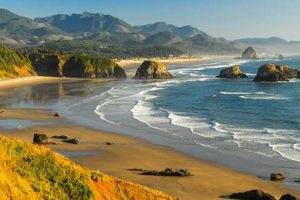
The scenic beauty of the Oregon coast, characterized by its rugged coastline and verdant forests, attracts millions of visitors annually. These forested areas serve as the backdrop for recreational activities such as hiking, camping, wildlife viewing, and scenic drives. Tourism generates revenue for local businesses, including hotels, restaurants, tour operators, and retail shops. The aesthetic and recreational value of these landscapes is directly tied to the health and preservation of coastal forests.
- Commercial Fishing and Seafood Industry
The health of coastal forests is inextricably linked to the productivity of coastal fisheries. Forests play a crucial role in regulating water quality and streamflow, which are essential for salmon spawning and other aquatic habitats. The commercial fishing industry, which relies on healthy fish populations, benefits directly from the ecological services provided by intact coastal forests. Deforestation and habitat degradation can negatively impact fish populations and reduce the economic value of the fishing industry.
- Real Estate and Property Values
Proximity to forests and natural areas enhances the value of coastal properties. Homes and businesses located near wooded areas often command higher prices due to the aesthetic appeal and recreational opportunities they provide. The maintenance of healthy forests can contribute to the stability and appreciation of property values, benefiting landowners and local governments. Conversely, deforestation or environmental degradation can negatively impact property values and diminish the attractiveness of the region.
The interplay between these facets demonstrates the economic significance of the Oregon coast’s timber. While timber production provides immediate financial gains, tourism, fishing, and property values rely on the long-term health and preservation of these ecosystems. Sustainable forest management practices, which balance economic objectives with ecological considerations, are therefore essential for ensuring the continued economic vitality of the region. The challenge lies in developing and implementing policies that promote responsible resource utilization while safeguarding the environmental integrity of coastal forests for future generations.
5. Environmental Threats

Coastal forest ecosystems are under increasing pressure from a multitude of environmental threats, posing significant risks to the long-term health and sustainability of the region. The interaction of these threats can exacerbate their individual impacts, leading to forest decline, habitat loss, and reduced ecosystem services. Understanding the specific nature and magnitude of these challenges is crucial for developing effective conservation and management strategies. These threats are of particular importance as they target the unique characteristics of the “oregon coast trees”, impacting their survival and the surrounding ecology.
Climate change, invasive species, and human activities stand out as prominent factors affecting the “oregon coast trees”. Climate change leads to altered precipitation patterns and increased frequency of extreme weather events, like windstorms, impacting tree health and increasing their susceptibility to disease and pests. Invasive species, like Scotch broom, outcompete native tree species for resources, disrupting forest composition and biodiversity. Human activities, such as unsustainable logging practices and land development, result in forest fragmentation, habitat loss, and soil degradation, further compromising the health and resilience of these coastal ecosystems. The situation is exacerbated by the proximity of coastal forests to urban areas, leading to increased human disturbance and pollution. For instance, nitrogen deposition from vehicle emissions and agricultural runoff can alter soil nutrient balances, favoring invasive species and impacting the growth of native tree species.
Addressing these environmental threats requires a multi-faceted approach encompassing climate change mitigation, invasive species control, and sustainable land management practices. Mitigation strategies include reducing greenhouse gas emissions, promoting forest conservation and restoration, and implementing adaptation measures to enhance forest resilience to climate change impacts. Active management of invasive species populations through removal and prevention of new introductions is critical for maintaining native forest biodiversity. Sustainable land management practices, such as selective logging, riparian buffer zones, and responsible development planning, can minimize human impacts on forest ecosystems. The challenge lies in implementing these measures effectively across the region, requiring collaboration among landowners, government agencies, and community stakeholders. The continued survival of the “oregon coast trees” depends on proactive and comprehensive strategies to mitigate these ever-increasing environmental pressures.
6. Conservation Efforts
Conservation efforts directed toward Oregon Coast trees are intrinsically linked to the preservation of the region’s ecological integrity and economic sustainability. These efforts represent a concerted response to the multifaceted environmental threats that jeopardize the survival of native tree species and the functionality of coastal ecosystems. The effectiveness of these initiatives directly influences the health, resilience, and long-term viability of forest ecosystems along the Oregon coastline. Cause and effect are evident: the degradation of habitats leads to reduced biodiversity and diminished ecosystem services, while proactive conservation yields improved forest health and enhanced ecological resilience.
The importance of conservation as a component of Oregon Coast trees is underscored by several real-world examples. The removal of invasive species like Scotch broom and gorse, conducted by various organizations, directly benefits native tree species by reducing competition for resources. Riparian restoration projects, which involve planting native trees and shrubs along stream banks, improve water quality, stabilize soil, and provide critical habitat for aquatic and terrestrial wildlife. Moreover, sustainable logging practices, implemented by responsible timber companies, aim to balance timber production with the long-term health and regeneration of forest ecosystems. Understanding these efforts’ practical significance informs policy decisions and management strategies, ensuring that conservation remains a central consideration in coastal resource management.
In summary, conservation endeavors are not merely supplementary additions but rather essential components of safeguarding the Oregon Coast’s forest legacy. Challenges remain in coordinating conservation efforts across diverse land ownerships, securing adequate funding for long-term monitoring and management, and addressing the growing impacts of climate change. Successfully navigating these challenges necessitates a collaborative approach, integrating scientific knowledge with community engagement and adaptive management strategies. Preserving Oregon Coast trees ultimately contributes to the well-being of both the environment and the human communities that depend upon it.
7. Forest Management

Forest management along the Oregon coast encompasses a range of practices designed to ensure the long-term health, productivity, and resilience of tree-dominated ecosystems. These practices are critical for sustaining both the ecological and economic values associated with Oregon’s coastal forests, demanding a balanced approach that considers timber production, biodiversity conservation, and watershed protection.
- Sustainable Timber Harvesting
Sustainable timber harvesting seeks to balance economic returns with ecological preservation by employing selective logging techniques that minimize impacts on soil, water quality, and wildlife habitat. This approach contrasts with clear-cutting, which removes all trees in a given area. Example: Implementing variable retention harvesting, where a proportion of trees are left standing to provide shade, seed sources, and structural complexity. This promotes natural regeneration and maintains biodiversity.
- Reforestation and Afforestation
Reforestation involves replanting trees in areas where forests have been previously removed, while afforestation involves establishing forests in areas that were previously non-forested. Selecting native tree species, such as Sitka spruce, western hemlock, and shore pine, is essential for promoting biodiversity and ecosystem function. Example: Planting seedlings of Sitka spruce after timber harvest, ensuring adequate spacing and protection from herbivory to promote successful establishment and growth.
- Invasive Species Control
Invasive plant and animal species can outcompete native flora and fauna, disrupt ecosystem processes, and alter forest structure. Effective forest management includes monitoring for and controlling invasive species through manual removal, herbicide application, or biological control methods. Example: Implementing a Scotch broom removal program, targeting areas where this invasive shrub is encroaching on native tree regeneration and hindering forest succession. This prevents further spread and protects native plant communities.
- Fire Prevention and Suppression
Wildfires can pose a significant threat to coastal forests, particularly during dry summer months. Forest management includes implementing fire prevention measures, such as creating fuel breaks and educating the public about fire safety. Active fire suppression efforts are also necessary to minimize the extent and severity of wildfires. Example: Creating and maintaining fuel breaks along roads and property lines, reducing the risk of wildfires spreading from human activities into forested areas. This provides a buffer that allows for more effective fire suppression efforts.
These facets of forest management are interconnected and crucial for ensuring the continued health and productivity of Oregon Coast trees. By integrating sustainable timber harvesting, reforestation, invasive species control, and fire prevention strategies, it becomes possible to maintain the ecological integrity and economic value of these vital coastal ecosystems, guaranteeing their resilience in the face of environmental changes.
Frequently Asked Questions
The following questions and answers address common inquiries concerning the vegetation along Oregon’s shoreline, providing clarifications and detailed information.
Question 1: What are the dominant tree species found along the Oregon coast?
The prevalent species include Sitka spruce (Picea sitchensis), western hemlock (Tsuga heterophylla), shore pine (Pinus contorta contorta), and red alder (Alnus rubra). Their abundance depends on factors such as proximity to the ocean, elevation, and soil conditions.
Question 2: How do Oregon coast trees adapt to the saline environment?
Adaptations vary by species but commonly include salt tolerance, wind resistance, and specialized leaf structures that minimize salt absorption. Shore pine, for instance, displays a stunted growth form to withstand strong coastal winds, while Sitka spruce demonstrates a relatively high tolerance to salt spray.
Question 3: What ecological roles do these trees play in coastal ecosystems?
They provide crucial habitat for diverse wildlife, stabilize soil to prevent erosion, regulate water quality, and sequester carbon, contributing significantly to the health and resilience of the overall coastal ecosystem.
Question 4: Are Oregon coast trees susceptible to specific diseases or pests?
Yes, they are vulnerable to various threats, including root rot diseases, bark beetles, and invasive plant species. Forest management practices aim to mitigate these risks and maintain tree health.
Question 5: How is climate change affecting Oregon coast trees?
Climate change poses several challenges, including sea-level rise, increased storm intensity, altered precipitation patterns, and increased susceptibility to pests and diseases. These impacts threaten the long-term survival of coastal forests.
Question 6: What conservation efforts are in place to protect these forests?
Conservation initiatives encompass sustainable timber harvesting practices, reforestation projects, invasive species control programs, and the establishment of protected areas. These efforts strive to balance economic activities with ecological preservation.
These questions and answers provide a foundational understanding of the trees along Oregon’s coast. Continued monitoring and research are vital for adapting to the evolving challenges facing these valuable ecosystems.
The following section will address current research.
Conclusion
The preceding exploration has delineated the multifaceted significance of Oregon Coast trees, from their ecological functions and economic contributions to the array of environmental pressures they confront. Understanding these interwoven aspects is vital for implementing effective conservation and sustainable management strategies.
Continued research, informed policy decisions, and collaborative engagement are paramount to safeguarding the future of these vital coastal ecosystems. Recognizing the intrinsic value and multifaceted role of Oregon Coast trees ensures their preservation for subsequent generations, securing the health and resilience of this unique landscape.