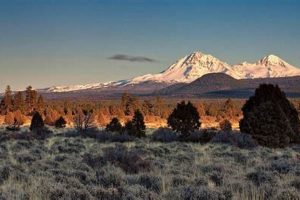
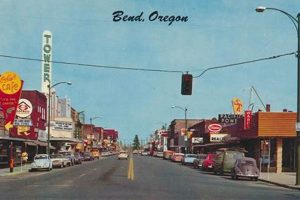
The distance between Oregon’s largest city and the high desert hub is a common query for travelers, businesses, and those considering relocation. It represents the geographic separation between the Willamette Valley’s urban environment and Central Oregon’s outdoor recreation opportunities. For example, knowing this separation helps individuals plan road trips and estimate travel times.
Understanding this separation is important for logistical planning, regional economics, and tourism. Historically, the journey between these two points was arduous, requiring significant time and resources. Improved transportation infrastructure has greatly reduced travel time, facilitating increased trade and tourism between the two regions.
This article will explore the various routes connecting these two Oregon cities, detail the typical travel times associated with each route, and consider the factors that can influence the duration of the journey, such as traffic and weather conditions. Furthermore, alternative modes of transportation will be examined.
Travel Tips
Considerations for planning a trip between Portland and Bend can optimize travel time and ensure a smoother experience.
Tip 1: Select the Optimal Route: Evaluate Highway 26 versus Highway 20 based on current road conditions and personal preferences. Highway 26 is generally faster, but Highway 20 may offer a more scenic drive.
Tip 2: Check Road Conditions: Before departing, consult the Oregon Department of Transportation (ODOT) TripCheck website for real-time traffic updates, construction delays, and weather-related hazards. This is particularly crucial during winter months.
Tip 3: Account for Seasonal Variations: Travel times can vary significantly depending on the time of year. Snow and ice can considerably lengthen the journey during winter, while summer months may experience increased traffic volume.
Tip 4: Factor in Fuel and Rest Stops: Plan for refueling and restroom breaks, especially when traveling with children or elderly individuals. Identify convenient locations along the chosen route to avoid unnecessary delays.
Tip 5: Consider Alternative Transportation: Investigate options like the Central Oregon Breeze bus service, which provides a direct connection between Portland and Bend. This can be a viable alternative for those who prefer not to drive.
Tip 6: Be Prepared for Changing Weather: The climate can change dramatically between the Willamette Valley and Central Oregon. Pack appropriate clothing and supplies to accommodate varying conditions.
Tip 7: Allow for Buffer Time: Building in extra time for unexpected delays, such as traffic incidents or unforeseen circumstances, can mitigate potential stress and ensure a more relaxed journey.
Adhering to these tips can contribute to a more efficient and enjoyable trip. Careful planning is essential for managing travel time and ensuring a safe arrival.
The next section will delve into available lodging and activities between both cities.
1. Mileage (Direct Route)

The mileage of the direct route represents the most fundamental aspect of determining the distance between Portland and Bend. It establishes the physical separation measured in miles, serving as the baseline figure for all subsequent calculations related to travel time and cost. Without knowing the precise mileage, estimating fuel requirements, planning rest stops, and comparing route efficiencies become significantly more challenging.
The direct route, typically following US-26 to US-97, spans approximately 160-180 miles, depending on the precise starting and ending points within each city. While this figure provides a static measurement, its practical significance lies in its role as a variable within more complex equations. For example, a delivery company optimizing its routes would use this mileage figure as a core input, adjusting for factors like traffic, road conditions, and vehicle type to minimize delivery time and fuel consumption. Similarly, a tourist planning a road trip utilizes the mileage to gauge driving duration and identify potential sightseeing opportunities along the way.
Understanding the direct route’s mileage allows for informed decision-making regarding transportation choices, resource allocation, and overall travel logistics. While other factors undoubtedly influence the journey between Portland and Bend, this figure remains the essential starting point for quantifying the separation between these two Oregon destinations.
2. Driving Time (Average)

The average driving time between Portland and Bend provides a crucial metric for gauging the practical distance beyond simple mileage. It reflects the typical duration required for the journey, factoring in speed limits, road conditions, and standard traffic patterns. Understanding the average driving time is essential for effective trip planning and logistical considerations.
- Impact of Speed Limits
Speed limits along the chosen route directly influence the average driving time. Sections of US-26 and US-97 have varying speed limits, requiring drivers to adjust their pace and consequently affecting the overall duration of the trip. Lower speed limits in populated areas or during adverse weather conditions contribute to longer driving times.
- Influence of Traffic Congestion
Traffic congestion, particularly in the Portland metropolitan area and around major towns along the route, can significantly extend the average driving time. Peak hours during weekdays and weekends often result in delays, increasing the total travel time considerably. Real-time traffic data and alternative route options can mitigate these effects.
- Effect of Road Construction
Road construction and maintenance activities can introduce temporary speed reductions and lane closures, directly impacting the average driving time. Planned or unexpected construction projects often lead to detours and increased congestion, requiring drivers to allocate additional time for their journey.
- Weather Conditions and Driving Time
Weather conditions, particularly during the winter months, can substantially increase the average driving time. Snow, ice, and heavy rain necessitate slower speeds and cautious driving, lengthening the duration of the trip. Monitoring weather forecasts and road advisories is crucial for safe and efficient travel.
The interplay of speed limits, traffic congestion, road construction, and weather conditions collectively determines the average driving time between Portland and Bend. These factors highlight the dynamic nature of the journey, emphasizing that the average driving time serves as an estimate subject to real-world variables. Careful consideration of these elements is essential for accurate planning and a more predictable travel experience.
3. Route Options (Highways)
The available highway routes significantly influence the perceived and actual distance between Portland and Bend. Different routes offer varying mileage, terrain, and traffic conditions, directly impacting travel time and overall journey experience.
- US-26 (Mount Hood Highway)
US-26 represents one of the primary routes connecting Portland and Bend. This highway traverses the Cascade Mountains, offering scenic views of Mount Hood. However, its higher elevation and mountainous terrain can lead to challenging driving conditions during winter months, potentially increasing travel time. In optimal conditions, it is often the faster route. Its proximity to Government Camp provides access to ski resorts and recreational areas, influencing route selection based on desired activities.
- US-20 (Santiam Highway)
US-20 provides an alternative route that bypasses Mount Hood, generally exhibiting lower elevations and milder winter conditions compared to US-26. While typically longer in terms of mileage, US-20 might be preferred during periods of heavy snowfall or icy roads on the higher-elevation route. The Santiam Pass portion of this highway offers access to the Detroit Lake State Recreation Area and other central Oregon attractions.
- Combined Routes and Local Roads
Although less common, combined routes involving segments of different highways and local roads exist between Portland and Bend. These routes may be chosen for specific destinations or to avoid known traffic bottlenecks on the main highways. However, these alternative paths often involve longer travel times and require careful navigation. The use of GPS navigation is recommended when exploring these less-traveled options.
The selection of a highway route directly impacts the perceived separation between Portland and Bend. Understanding the characteristics of each optionUS-26 and US-20allows for informed decision-making based on current conditions, personal preferences, and the intended purpose of the journey. These considerations are fundamental to optimizing travel efficiency and ensuring a safe and pleasant experience.
4. Traffic Impact (Variability)

The variability in traffic conditions significantly affects the perceived and actual distance between Portland and Bend. Traffic congestion introduces unpredictability, making the calculated mileage a less reliable indicator of travel time. Understanding these variations is crucial for accurate trip planning and logistical considerations.
- Peak Hours and Congestion Points
Commuting patterns in the Portland metropolitan area and around towns along the US-26 corridor, such as Sandy and Madras, generate recurring periods of heavy traffic. Morning and evening rush hours, coupled with weekend travel surges, create congestion points that substantially increase travel time. A journey undertaken during off-peak hours can be significantly faster than one during peak congestion. For instance, a trip commencing at 7:00 AM from Portland may encounter delays extending the journey by an hour or more compared to a departure at 10:00 AM.
- Accidents and Incidents
Unforeseen accidents, vehicle breakdowns, or other incidents along the route introduce unpredictable delays. These events can create significant bottlenecks, causing substantial increases in travel time. The Oregon Department of Transportation’s TripCheck website provides real-time information on accidents and incidents, allowing travelers to adjust their routes or delay their departure. The impact of an incident can vary, ranging from minor delays of a few minutes to complete road closures necessitating detours.
- Seasonal Events and Holidays
Special events, such as the Sisters Rodeo or holidays like Thanksgiving and Christmas, generate increased travel volume between Portland and Bend. The surge in traffic leads to congestion on major highways, extending travel times considerably. Planning trips around these periods or departing during off-peak hours can mitigate these delays. The anticipation of these events allows for proactive adjustments to travel schedules.
- Construction and Road Maintenance
Ongoing road construction and maintenance projects introduce temporary lane closures, speed reductions, and detours, directly impacting travel time. These projects, often scheduled during the warmer months, can create significant delays, particularly on US-26. Awareness of construction zones and planned roadwork, obtainable through ODOT resources, allows for proactive route adjustments or modifications to the travel itinerary.
Traffic variability underscores the limitations of solely relying on mileage as a measure of the separation between Portland and Bend. The dynamic nature of traffic conditions necessitates real-time monitoring and adaptable planning strategies. Accounting for peak hours, potential incidents, seasonal events, and construction zones allows for a more realistic estimation of travel time, contributing to a more predictable and efficient journey.
5. Elevation Changes (Terrain)

The topographic variations between Portland and Bend exert a significant influence on the perceived and actual separation. The change in elevation and the nature of the terrain impact fuel consumption, driving speed, and overall travel time, thereby modifying the practical distance despite a fixed mileage.
- Mountain Passes and Grade Resistance
The Cascade Mountain Range presents a formidable barrier between the two cities. Traversing mountain passes such as Government Camp on US-26 or Santiam Pass on US-20 involves significant changes in elevation. These ascents introduce grade resistance, necessitating increased engine power and potentially reduced vehicle speed, particularly for larger vehicles or those with lower power-to-weight ratios. The effect is a lengthening of the journey compared to travel on level terrain. For instance, a fully loaded commercial truck will experience a more pronounced impact on its speed when ascending these grades than a passenger car.
- Impact on Fuel Consumption
Ascending and descending mountainous terrain has a direct correlation with fuel consumption. Climbing requires increased fuel expenditure to overcome gravity and grade resistance, while descending may involve engine braking to maintain safe speeds. The cumulative effect can significantly reduce fuel efficiency compared to driving on a flat highway. Consequently, a journey between Portland and Bend will likely require more fuel stops than a comparable distance on level ground, adding to the overall time commitment and cost.
- Influence on Weather Conditions
Elevation changes are closely linked to prevailing weather conditions. Higher elevations are prone to colder temperatures, increased precipitation, and the potential for snow and ice accumulation, especially during winter months. These adverse conditions necessitate reduced driving speeds, increased caution, and potentially the use of traction devices, all of which contribute to extended travel times. For example, a clear, dry day in Portland does not guarantee similar conditions at Government Camp, where snow and ice can significantly impede progress.
- Road Curvature and Limited Visibility
Mountainous terrain often dictates winding roads with numerous curves and limited visibility. These road characteristics necessitate lower speeds and increased driver awareness, impacting the overall travel time. The reduced visibility around curves can also increase the risk of accidents, potentially leading to further delays. The need for heightened concentration and slower speeds contrasts sharply with the ease of travel on straighter, flatter roads, thereby affecting the perceived distance between Portland and Bend.
In conclusion, the elevation changes and varying terrain between Portland and Bend represent a tangible factor that directly influences travel time, fuel consumption, and overall driving experience. These topographic considerations necessitate careful planning and an understanding of how the mountainous environment modifies the simple calculation of mileage into a more complex assessment of the actual separation between the two cities.
Frequently Asked Questions
This section addresses common inquiries regarding the distance between Portland and Bend, Oregon, providing factual information for travel planning and logistical understanding.
Question 1: What is the approximate driving mileage between Portland and Bend?
The driving distance is approximately 160-180 miles, contingent upon the precise starting and ending locations within each city and the chosen route.
Question 2: What is the typical driving time between these two locations?
The average driving time ranges from 3 to 4 hours under normal conditions. This estimate is subject to fluctuation based on traffic, weather, and road construction.
Question 3: Which highway routes are commonly used to travel between Portland and Bend?
The primary routes are US-26 (Mount Hood Highway) and US-20 (Santiam Highway). US-26 is generally shorter but may be impacted by winter weather. US-20 offers a lower elevation route.
Question 4: How does traffic impact the travel time between Portland and Bend?
Traffic congestion, particularly in the Portland metropolitan area and near towns along the route, can significantly increase travel time, especially during peak hours and holidays.
Question 5: Are there alternative modes of transportation available besides driving?
Yes, bus services such as the Central Oregon Breeze offer a direct connection between Portland and Bend. Private shuttle services and ride-sharing options may also be available.
Question 6: How do weather conditions affect the journey between these two cities?
Winter weather, particularly in the Cascade Mountains, can significantly extend travel time due to snow, ice, and reduced visibility. Checking weather forecasts and road conditions prior to departure is essential.
In summary, determining the distance between Portland and Bend requires considering both mileage and factors that influence travel time. These elements are vital for effective planning.
The following section will provide sources of information about Portland and Bend.
Conclusion
The preceding analysis of how far is portland oregon from bend oregon underscores that the determination transcends a simple mileage calculation. While the distance may be fixed, the practical separation is a dynamic measure influenced by route selection, traffic conditions, elevation changes, and prevailing weather. Accurate planning necessitates considering these variables to ensure efficient and safe travel.
Understanding the nuances of the journey between these two Oregon cities equips individuals and organizations with the knowledge to optimize travel strategies and resource allocation. Continued advancements in transportation infrastructure and real-time information systems promise to further refine the estimation and management of this separation, enhancing connectivity between the Willamette Valley and Central Oregon.